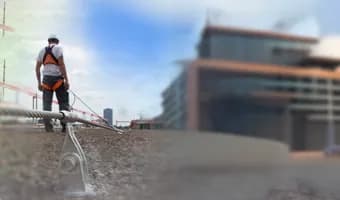


Work at height is part of routine operations across manufacturing, logistics, aviation and facility maintenance. Roof inspections, waterproofing, crane maintenance and aircraft servicing can put workers close to an unprotected edge, fragile surface or open drop.
A properly designed horizontal lifeline anchorage system gives workers a continuous connection point as they move along an elevated work area. When designed, installed and used as part of a complete fall-protection plan, it can help prevent a worker from reaching a fall edge—or arrest a fall if one occurs.
What is a Type C horizontal lifeline?
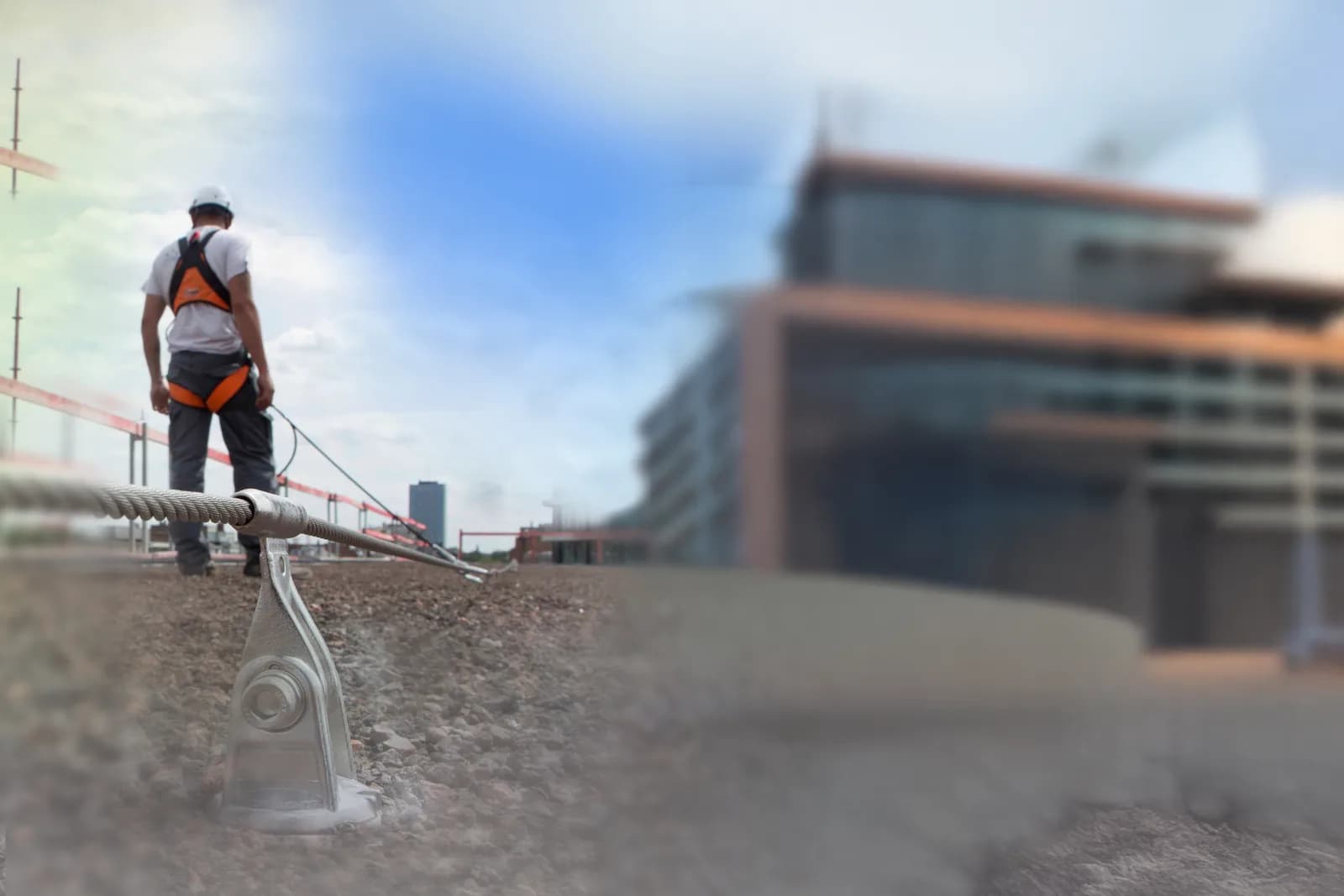
Under EN 795:2012, Type C refers to an anchor device that uses a horizontal flexible anchor line. The worker connects their personal fall-protection equipment to the line, often through a travelling connector, so they can move along the work area while remaining connected. European Commission decision describing EN 795 anchor-device types
In India, IS 3521 (Part 8):2021 covers flexible horizontal lifeline systems used with personal protective equipment for protection against falls from height. BIS describes the standard as setting design and performance requirements, test methods, user instructions, marking and labelling; its scope allows use by up to three people at one time, subject to the system’s design and instructions. BIS product manual for IS 3521 (Part 8):2021 | BIS standards overview
Why is fall protection necessary?
Falls from height can cause life-changing injuries or fatalities. Employers therefore need to identify work-at-height hazards and put suitable controls in place. In India, the Factories Act states that, where a person may fall while working at height, safety must be provided “so far as is reasonably practicable” by fencing or other means. The specific requirements that apply depend on the workplace, activity and relevant state rules. India Code: Factories Act, Section 32
A particular lifeline system is not automatically mandatory for every site simply because these standards exist. The standards define requirements for the equipment and system; applicable laws, state rules, project specifications and risk assessments determine what protection is required for a particular job. BIS explains that Indian Standards are generally voluntary unless the government makes compliance compulsory for a product through a Quality Control Order. BIS FAQ on compulsory certification
The practical priority is to avoid work at height where possible, prevent falls with suitable collective protection such as guardrails where practicable, and use personal fall-protection systems for risks that remain. HSE: Working at height safely
How can a lifeline help prevent falls?
A lifeline can support two different approaches, depending on the task and system design:
- Work restraint: The connection is set up to stop a worker reaching an edge or other fall hazard.
- Fall arrest: If a fall occurs, the connected system is designed to arrest it and limit the consequences, subject to correct system selection, adequate fall clearance and a prompt rescue plan.
The distinction matters: fall arrest does not prevent a fall from starting. Where the layout allows it, work restraint can keep the worker away from the edge in the first place.
A lifeline also allows connected workers to move along an approved route while maintaining a connection. That can reduce the need to repeatedly disconnect and reconnect as they work. The actual protection depends on the full system—including the line, anchorages, supporting structure, harness, connectors, clearance and user training—not on the cable alone.
Where can horizontal lifelines help?
Roof work and pre-monsoon inspection
Roof inspections and waterproofing can involve wet or slippery surfaces, exposed edges, fragile roof areas and frequent movement between work zones. A lifeline route can provide a continuous connection along planned access paths and work areas. Before work begins, assess roof strength and condition, identify fragile sections and openings, and determine whether the system can keep workers away from edges.
EOT crane walkways
Inspection and maintenance on an EOT crane walkway can expose workers to fall hazards, limited access and moving equipment. A suitable lifeline can provide connection along the approved walkway, but it must be compatible with the crane structure and the maintenance method. Equipment isolation, access controls and a task-specific rescue plan remain essential.
Loading and unloading bays
Logistics work may require people to access trailer roofs or work near open vehicle edges. A carefully planned lifeline arrangement can help keep workers connected while they inspect, cover or secure loads. The system layout must account for vehicle movement, changing trailer positions and the need to keep pedestrians and vehicles clear of the work zone.
Aircraft maintenance
Aircraft maintenance can require work at height over wings, fuselages and other elevated surfaces. A lifeline system can support continuous connection along designated maintenance routes, helping technicians reach work areas while reducing exposure to fall hazards. The system must be designed for the aircraft or hangar environment and coordinated with the maintenance procedure.
What should a safe lifeline solution include?
A reliable solution begins with a site-specific assessment. Before installation and use:
- Assess the task and structure. Confirm the work route, possible fall edges, roof or support-structure capacity, access method and operating conditions.
- Select the right protection strategy. Consider whether the system can keep workers in restraint, or whether fall arrest is necessary.
- Design the complete system. Account for line layout, spans, users, compatible connectors, potential fall clearance and loads transferred to the structure.
- Install and inspect correctly. Use competent personnel, follow the system manufacturer’s instructions, and keep inspection and maintenance records.
- Train workers and plan rescue. Workers need to understand how to connect and move safely, what to do if a fall occurs, and how a suspended person will be rescued promptly.
Standards compliance is an important part of system selection, but it does not replace site engineering or safe work planning. Confirm that the specified product and configuration are supported by the manufacturer’s documentation, are appropriate for the intended use and meet the requirements that apply to the project and location.
Build safer access into the work plan
A horizontal lifeline anchorage solution can help workers stay connected across elevated work areas and support safer roof, crane, logistics and aircraft maintenance activities. Its effectiveness depends on choosing the right system for the job and integrating it with structural assessment, training, inspection and rescue planning.
If your facility has recurring work-at-height tasks, begin with a review of the work areas, access routes and fall hazards. That assessment can help identify where a lifeline system is appropriate and what supporting measures are needed to protect workers.
This article provides general information. Confirm applicable legal and project requirements with a qualified safety professional for your location and work activity.